
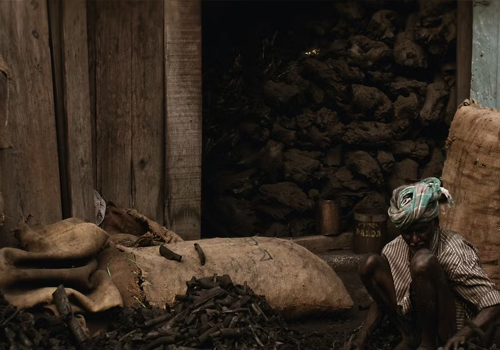
The richest coal fields in India are also the most precarious for workers and those who live on them.
The threat of homes collapsing or burning down due to ground subsidence and coal fires — some of which have burned for a century — is a clear and present danger to thousands of people in Jharkand and Raniganj regions, around 300 kilometres northwest of Kolkata. The risks of sudden death and injury frequently force people, in particular vulnerable migrant workers, into having to suddenly abandon everything and flee. This sudden exodus results in the loss of jobs and sources of income. It also leads to social disintegration and exposes the migrants to further poverty as they struggle to find work and settle in new places. In the Jharia coalfields, where underground fires have been burning for over 100 years, sudden land subsidence results in houses catching fire, people being killed and families being forced to abandon their properties and flee. These are common occurrences in Jharia, but its mines also produce the finest quality coal in India, which in 2020 accounted for 44 per cent of India’s primary energy demand.
Despite the ever-present danger, many of those working the mines find it difficult to migrate and settle elsewhere, because local people fear losing their daily source of income from coal picking.
In the absence of alternate means of income, gathering burnt high-grade coal to sell in the market helps them make a living. Even if they want to move to escape the hazards of living next to a coal mine, without any resettlement and rehabilitation schemes, most do not find an appropriate place to resettle. The Jharia Rehabilitation and Development Authority has been created to provide people with alternative job options and help their resettlement in safer environments. However, relocation to stable land away from coal mines often becomes a hurdle to earning a livelihood in the absence of higher wages and dearth of work opportunities in manufacturing industries, and other sectors without formal education, and results in people choosing to return to live in their dilapidated homes and engage in informal mining despite the constant dangers. The proportion of homeless people engaged in illegal coal extraction is also quite high.This makes planning for people to live sustainably elsewhere ineffective, as many choose not to settle there.
India’s Central Mine Planning and Design Institute has identified more than eight mine areas in the Raniganj Coalfield as high-risk and unstable, with more than 100,000 people in danger of being forced to flee due to buildings collapsing, ground subsidence, mine fires or other accidents. The Ratibati colliery of Raniganj Community Development Block is highly susceptible to land subsidence because of the vacant labyrinth beneath the crust, and a population of above 30,000 threatened with either an imminent cave-in or becoming a victim of shock mobility.